
As Above, So Below
We take some conceptual heuristics for granted but discard others without good reason, but all pure concepts have a similar degree of non-existence.

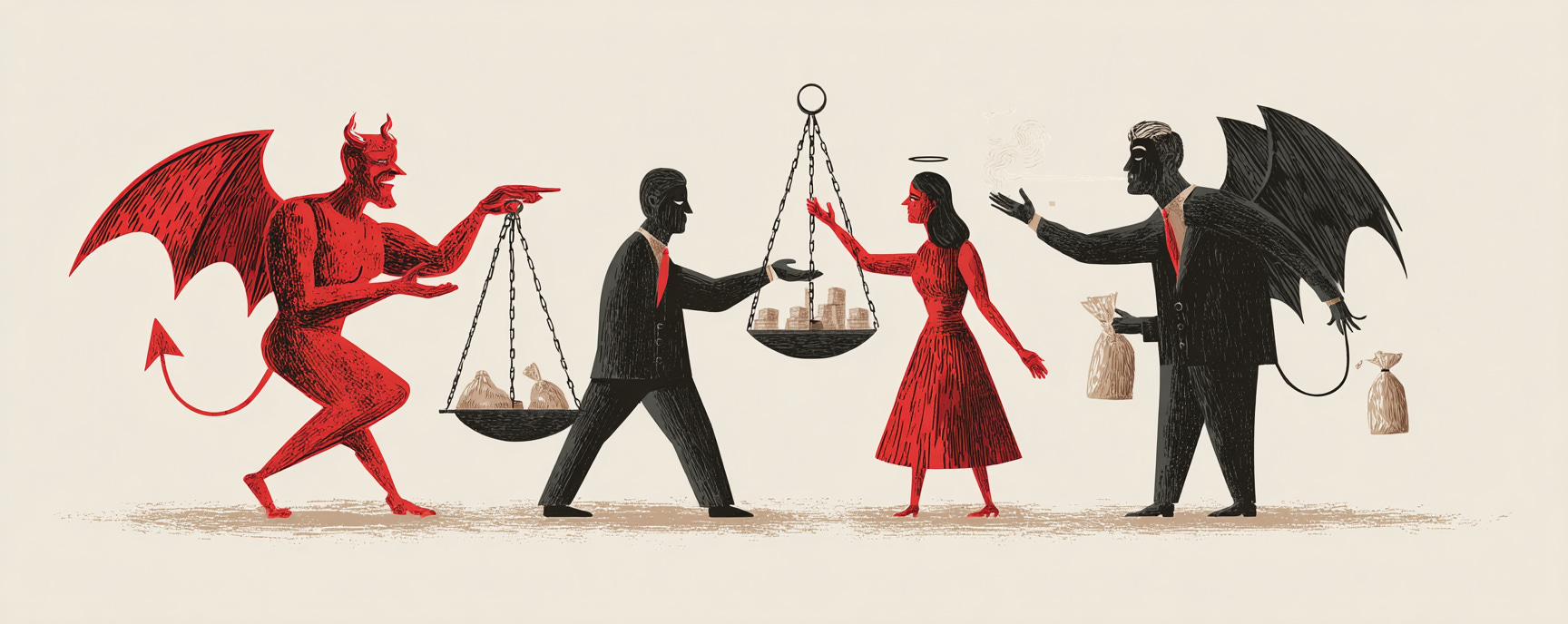
We all know what “the economy is” but there’s no one thing in the world you can point to and say ‘that’s the economy!’ Some people might think its GDP, or the trade deficit, or the interest rate, but thats really a conflation. Those are all economic indicators, some measure of economic activity.
In a strictly materialist sense, the economy does not exist, its just a concept that stands in for the sum total of all productive commercial activity that goes on in a country. While some people might say there’s a platonic ‘ideal’ of a concept like love, or triangles, or dogs, and all the object forms of these we encounter are imperfect instantiations, I don’t think many people believe there is a ‘platonic ideal of economy’ that any of our economies is a projection of. No, the economy is just a big made-up word, like nation, community, ethnicity, culture, and so on, that applies to some huge aggregate of related activities, objects, ideas, rules, customs, and so on, and is a stand-in for a messy world but lets us get conceptual leverage over it.
What “the economy” seems to really point to is, a set of incentives as made up by rules, conditions, material abundances and scarcities, and the collective behavior of individuals these produce as self-interested rational agents, i.e. market forces. That’s ‘the economy’ in a nutshell: incentives and the market forces they generate.
For a long time I thought ‘incentives’ were to explain all the terrible stuff going on in the world, with the most ‘naive’ example being big ol’ bad oil executives, or tobacco executives, trying to destroy the environment or give people lung cancer. How could they do those things? Incentives. They had mortgages to pay, kids to send to college, and they were removed enough away from the effects of their actions that it was easy to ignore them and go around thinking they weren’t doing bad things. I think there is essentially no one who actively thinks in their mind, “I am evil,” and if you look at history the people who did the most evil things often believed they were doing the most good. Indeed, it was their conviction of their own good-ness that motivated them to do outsized acts of evil.
Lately there’s been a lot of news headlines that could be explained in terms of local incentives, like UK politicians and police covering up the rape of around one million young girls, or school shootings, or vicious terrorist attacks on civilians. It would be easy enough to look these things and say ‘look, those local incentives did such-and-such’ and give complicated explanations as to why. But really we are just lacking some broad concept, like ‘the economy,’ to categorize the general class of situations, thoughts, and actions that lead people to into doing terrible evil things.
Is there an equivalent concept to something like ‘the economy’ that describes when local incentives or circumstances drive people to do horrible, evil things? Yes.
Demons. Demonic Forces. You know, Satan and his lieutenants.
When people lead themselves into committing terrible actions against others, that’s a sign of demonic forces. Demonic forces really just mean that there’s a construction of local incentives that drive actions towards some terrible outcome. There is no difference between ‘incentives’ as the material condition and ‘demonic forces’ as the conceptual abstraction. Hell, even incentives as a concept is a level of abstraction above something like ‘they were raised in a bombed out hell-hole and taught to hate these other people and felt good killing innocent people’ etc etc. So in that sense Demons are as equally real as ‘the economy’ or at least a good description of a general subclass of ‘incentives and the behavior they produce.’
Somehow the modern mind probably doesn’t like that, because we’re all too caught up in our self-righteous modernity of scientific framing of things, thinking science has debunked religious belief, but that other made-up concepts like ‘the economy’ are objective facts of the world. Thinking ‘the economy’ is as real as a specific table, or the road surface outside your house, is a philosophical approach called nomothetical realism that looks for general governing principles of dynamical systems and then assumes those rules or principles are as real as the things they govern. That’s a perfectly fine ontological viewpoint in my books. All ideas are made up, and if believing something is real lets you make better predictions about the world, then its a useful illusion, like money.
Now, when you read about someone shooting up a church, you could think to yourself ‘that’s a sign of mental illness, that produced some set of incentives in their mind that motivated them to go do terrible things’ and then you start taking apart what the specific circumstances were that generated those incentives, like hearing voices, hating humanity, feeling persecuted, living in a delusional video game, loss of self control, or things like that. You might say, ah yes, these are all symptoms of a medical illness called schizophrenia, or something. But then you could also go and open up their personal diary and read it, and see them drawing themselves as baphomet, the devil, saying they feel like ideas are coming into their head from somewhere else, which are all extremely specific references to ‘demons’ or demonic forces and not in the abstract sense like ‘the economy’ or ‘incentives’ but in a way that is very much more material or real, on par with ‘I grew up being taught to hate these other people so I think I should kill them when I can’ when you ask someone about why they did the evil thing.
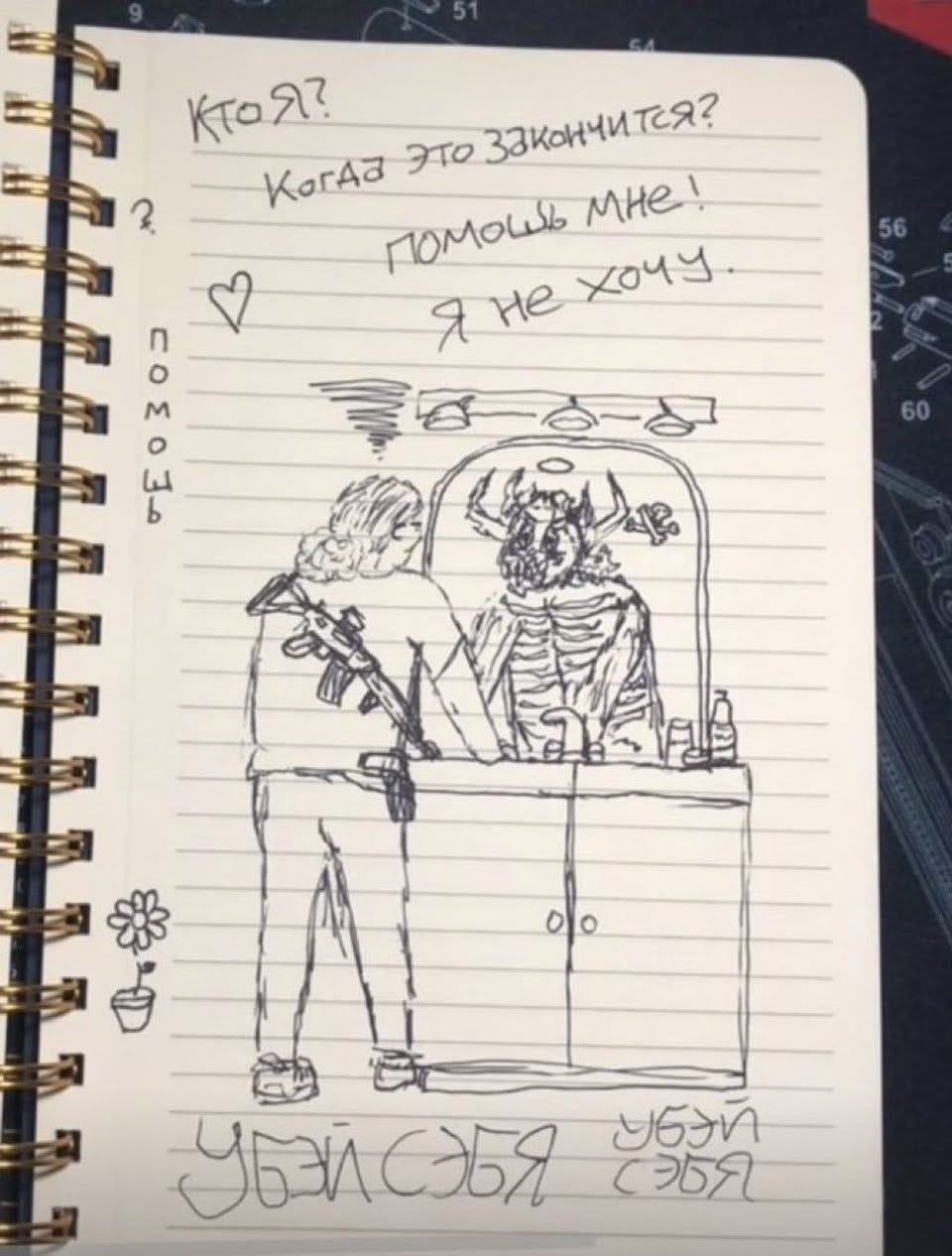

If you were to talk to the person directly and hear their account of their own experience, they’d say ‘I’m being haunted by demons and controlled by the devil.’ That’s on par with the oil executive saying something like ‘I need to pay my mortgage and send my kids to college’ - it’s their account of the motivations behind their actions. It’s actually far more material and specific than ‘the economy,’ or the subclass of ‘incentives.’ It’s about as direct and real as it gets when it comes to pinning down what the specific incentive or motivating factor is.
Anywho. Demons are real, at least as real as any other kind of ‘motivation’ or ‘reason’ for doing things. Get over it, learn to spot it, and start taking it seriously when people say they belong to the Satanic church, or worship Baphomet, or commune with dark forces. It’s evil. Evil is real. Demons are real. As real as any other kind of abstracted concept, and seemingly far more real than ‘the economy.’
And it may be possible to do something about this problem by retrofiting Levin's concept of Technological Approaches to Minds Everywhere to the upper realms. As below, so above.
Andrew, have you read the book “After” by Dr. Bruce Greyson? You would love it.